INTRODUCTION
Wait a minute, who am I?
What is the "Self"? If you can define it, can you define it objectively? Can you critique it in the same way? Can you then apply this same approach to other "selves" of other people, provided you know what they are?
These are some questions brought about by the philosophical concept of the self. Through the study of this area of philosophy, we work towards understanding the consciousness of the human person, guidance for ethical decision-making, and tools to navigate various existential questions (while avoiding existential crises!) by analyzing what constitutes identity, how the 'I' endures over time, and what connects our mental states to our physical form.
Thus, the questions below (with a little/lotta bit of humor…) and the answers provided to them aim to help this cause by providing practical situations of how identity can be perceived, and what we can do to further the objectives of personal philosophy and the ultimate (ultimate?!) definition of the Self.
"Knowing yourself is the beginning of all wisdom."
The "Babe" Phone Case Study
Take this case study: You named your phone, "Babe". Babe has been beaten down drastically over the years to the point that you had to replace all of Babe's parts – the screen, the buttons, the casing, etc. Even your sim card had to be replaced. After all these changes, is this still your "Babe"?
Answer: I would like to laban that this will not be my original "Babe" anymore. Individuals have objects and bagay-bagay in their lives that are significant to them, essentially associating memories and experiences (relapse talaga 'yan) with that object. In accordance with John Locke's Memory Theory, the self is defined through the memories it retains. If I were to palit-palit all the parts of my "Babe" with new ones, all the alaala of each fragment of the original babe would be tanggal-tanggal na and changed. Furthermore, if I were to replace all parts of "Babe" with parts of the new iPhone 17 Pro Max 256GB Fully Paid, and infront of me is "Babe" and another iPhone 17, how will I be able to differentiate the two? Ang mga tao na ito tends to memorize or contextualize people according to the (1) memories attached to them and their (2) physical appearance. That's why when we look at someone's childhood photos and they look alike, we can immediately say "uy, cute mo pa dito ah". When we apply this same thinking to "Babe", we personalize the phone by its (1) physical attributes (case, size of screen, type of charger, processor etc.) and (2) memories (scratches, cracks on the screen, when it was bought, etc).
Mind Over Matter?
If the mind is non-physical and the body is physical, how does the phrase "mind over matter" make sense? Or does "matter over mind" make more sense? Explain your answer.
Answer: In the case (IN THE CASE ⁉️) of mind and body, I would like to argue that "mind over matter" makes a lot more kwenta compared to the latter. To contextualize the phrase, "mind over matter", it describes the kakayahan of the utak to control the galaw of the body. I would like to laban that partly, both broskis Descartes and Leibniz's solution for the mind-body problem work hand-in-hand in explaining the phrase. Descartes argues that there is an interaction between the mind and body, but is medyo ewan of what mechanism allows it. I would like to take the standpoint (STANDDDPOINTTT ⁉️) that this mechanism is due to the pre-established harmony that God has set for our mind and body (Leibniz's). This is under two major points: (1) Is that the thoughts (mind) and actions (body) that consists us is already pre-determined by God (Leibniz), but we are given the illusion of free will that makes us think that both have an interaction (Descartes). This can be separated into two leveled (oa talaga) views: (1) God making our lives pre-determined and (2) our earthly view of free will.
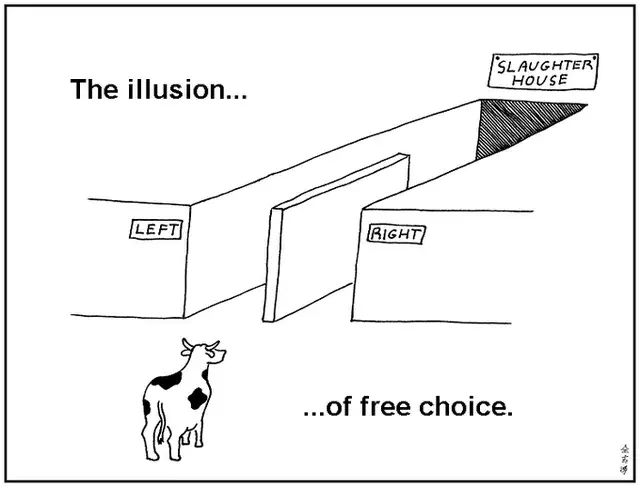
For example, God already pre-determined the action of us being hungry (mind) and eating at this hour (body). But in the perspective of humans, both the mind and the body interact by the stomach growling (body's response) and the thought of eating (mind's response).
Which Theory Do You Identify With?
Which theory of the self do you most identify with? Explain your answer.
Answer: Among the given theories of the self, I personally identify best with Hesse's Onion Model (gutom n tlga sha). Growing up, I would often ask myself, "who am I really?" and ang sinasagot ko, ako si Dennis (joke). Am I this outgoing and extroverted person who can socialize with everyone? Am I this leader-like person who is mostly serious and focused on their goals? Am I this spontaneous and unstructured person who is mostly goofy and happy? Some of these "selves" contradict one another, and oftentimes I find myself choosing one self over the other. However, that does not remove the fact that these selves exist, and these still show up given the right circumstances. For example, I am generally a strict person when it comes to my time, but when my family asks for my time, I'm willing to break my schedule for any spontaneous events. Furthermore, I'm often a jolly and outgoing person, but in certain situations (even when I'm out with my friends), I'd also enjoy my personal company and not lead the conversations (ambivert yarn). With Hesse's Onion model, there is no true self. Self consists of multiple layers that are constantly changing and transforming on a daily basis, depending on our experiences. The emotions, actions, and interactions of other people influences the layers of self, inevitably changing the "self" in the process.
Filipino Outlook on the Self
Given the many theories of the self, which do you think most closely resembles a Filipino outlook on the self? Or do you think none of those theories satisfy the criteria for how we view ourselves as Filipinos?
Tbh ang gulo nitong sagot, kasing gulo ng nagpauso netong philosophy neto ems. Pero ayun, feel ko nasa Self as Choice tayo ni Sartres ba un? Parang grade ko lang sa Philo hahahaha,,, n e wayz sabi nya kasi we r only what we make of ourselves, and tama naman na dito un sa Pilipinas e. Tignan mo lng ung political kineme ngaun. Puro sya choice ng "ah magiging bootlicker ako neto" (shoutout sa mga dee dee ess jn, PI 100 nyo po) na, kahit may literal na nasa harap ng mukha nila na kung hindi man lahat, merong mali sa pag-iisip nila. Sige, okay lang naman un, [REDACTED] naman nila ean e. Poide rin nmn sabihin na "ah ganyan tayo kasi dahil sa kasaysayan (Kas 1???) natin e". Sige, okay lang din! Pero jusmiyo meron din namang point na nagpapakamangmang na lang tau sa sarili natin at choice na natin na hindi na umusad 😭 like girll??? Sarili laban sa sarili?? Encantadia??
PERO AT LEAST, AT LEAST meron din namang kabaliktaran neto ngayon. May mga pumipili rin naman sa #self (tanggapin nyo na tong sagot please ems) nila na kahit papano ialay ang bohai nila sa tamang pagtrato ng del mundo sa kapwa man o sa puno na inihian tas sinabihan ng "tabi tabi po". Which, choice din naman nila un. Basta ean, kung ano man way of water natin sa bohai un din nmn nagbubuo ng kung sino tau. Part din cguro kung nahahappy ba tyo sa choice natin na kung sino tyo. Ayaw mo sa choice mo? Edi baguhin! Kaya nga nauuso yung character development tas nakipagbalikan sa ex e. Akshuwally may pagkabundle theory din to e na paiba iba tyo ng isip (except pagdating sa pagkain) na kung sino tyo pero mostly sa choice din nmn un kung magsstay ba tyo or shift, kaya dat maganda GWA mo sa sarili mo.